Innovation Park Artificial Intelligence

Heilbronn, DE

Type Masterplan, Landscape design
Design 2022-2024
Completion 2027
Location Heilbronn, Germany
Size 30 ha
Client Heilbronner Konsortium
I.c.w MVRDV Thornton Tomasetti blank"Studio Animal Aided Design REALACE GmbH Peutz Consult GmbH Gruner Deutschland GmbH
Team Peter Veenstra, Yishan Du, Lucio Fiorentino, Martin Garcia Perez, Silke Volkert, Jie Wang, Roberto Coccia, Simon Verbeeck, Yueying Wan, Mikel Orbegozo, Sara Ingignoli, Nerea Febré Diciena, Marijn Vreriks, Pasha Vredenbreg, Dick Scholtus, Silvia Motta

Uniting forces of AI and nature
The force of nature combined with the potential of AI is unparalleled in smarter landscape and ecosystem designs. The Innovation Park Artificial Intelligence (Ipai) aspires to position itself as a leading AI research and education center where ideas can be started, tested, and taught in an inspiring environment. By bringing together attractive companies, visitors, and technology worldwide, the center aims to become a hub for developing new business ideas and business models through AI solutions. LOLA and MVRDV won the competition to design the new 30 ha Ipai campus, aiming to place smartness and AI ecosystems at the center.

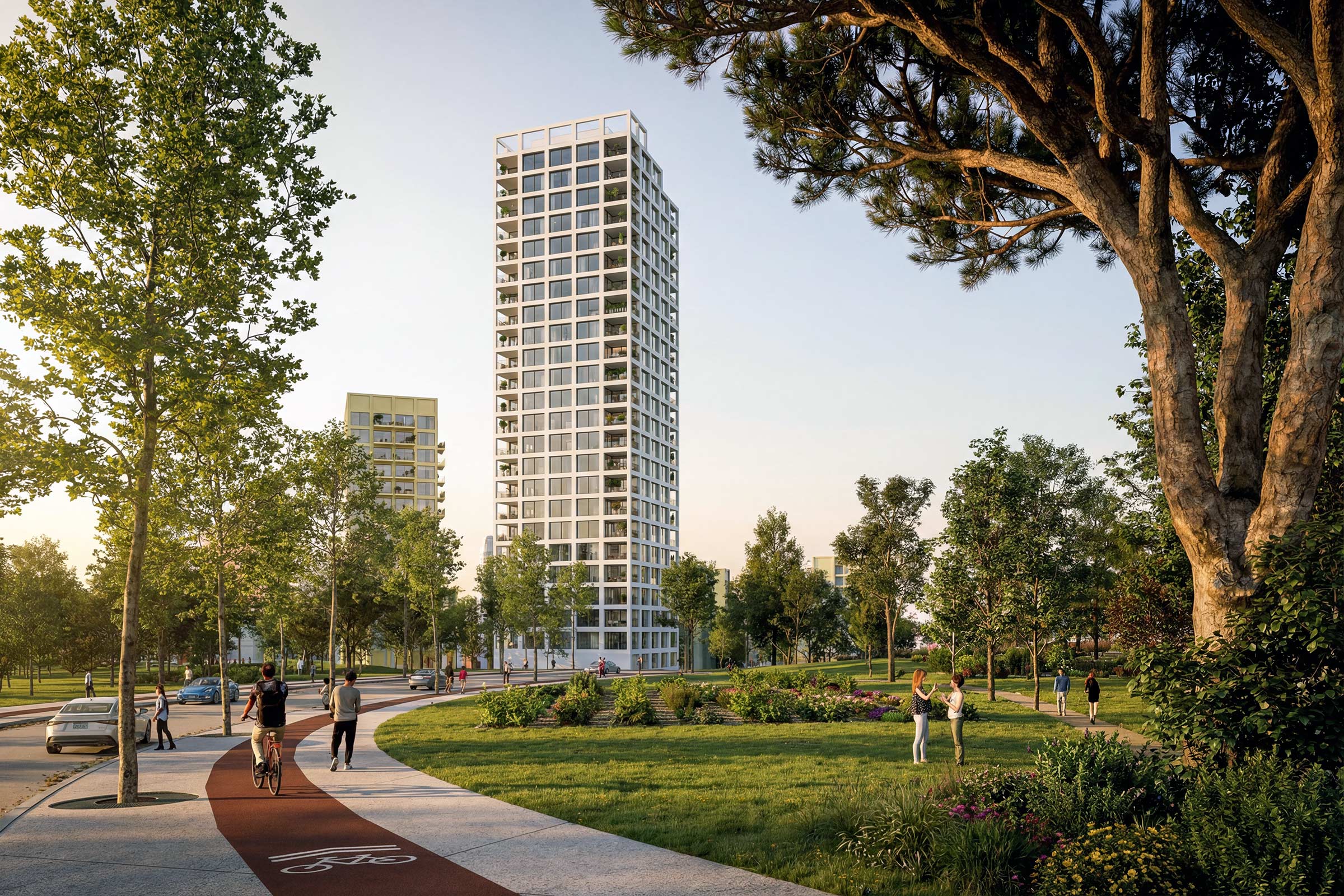
The compact circular building scheme of the Ipai campus leaves a maximum surface unsealed to connect to the surrounding landscape, store carbon, stimulate biodiversity, and offer numerous relaxing outdoor spaces. With the ambition to become nature inclusive, the landscape design connects the natural networks with the streets within the central area. The building facades further tailor these ambitions by having bird-friendly nesting facades and a created ecosystem tailored for pollinators. All facets of the Ipai campus and its surrounding landscape are considered to allow a thriving fauna, flora, and people.

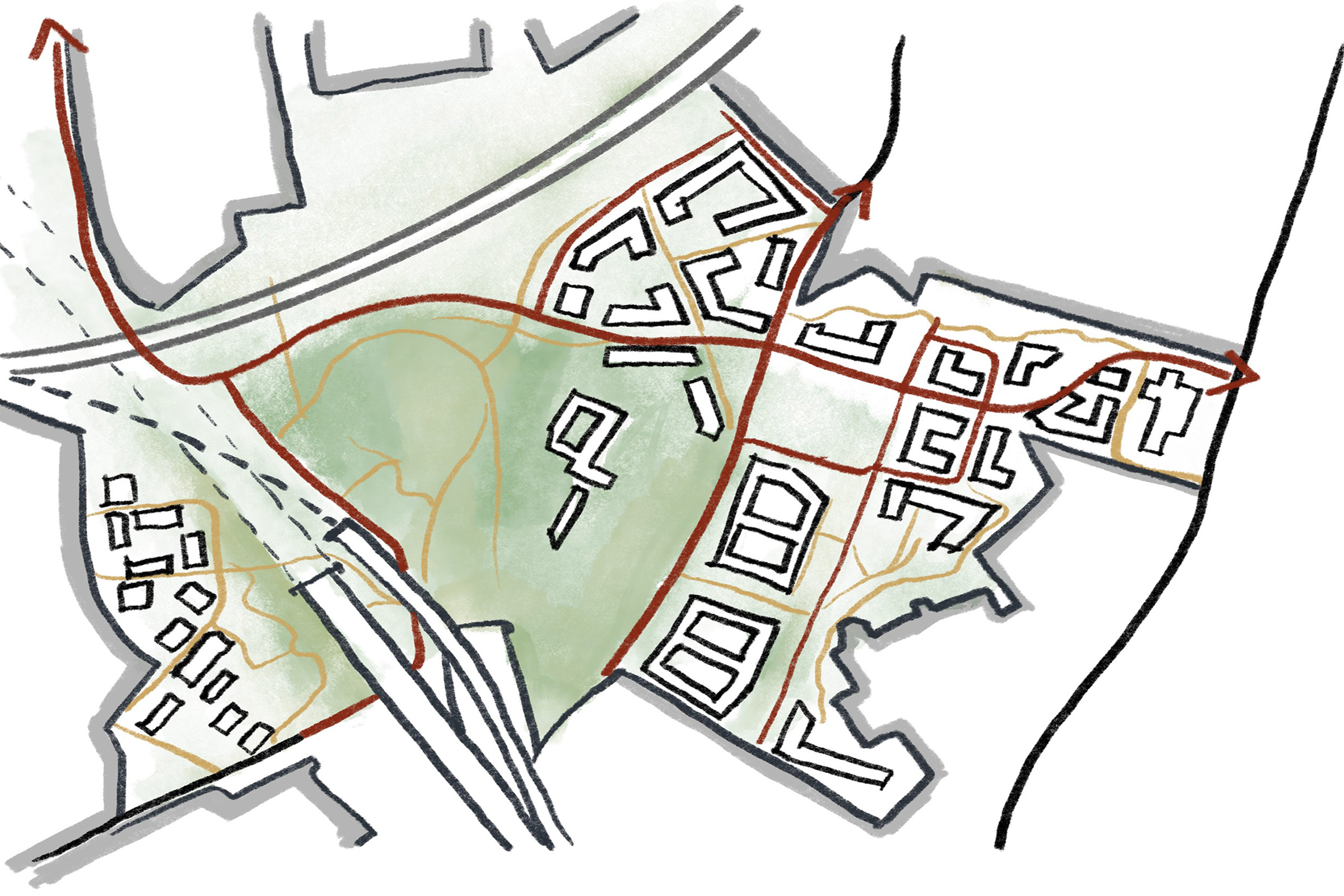
Ipai campus plan

Iconic Loop
To create a campus competing with world-renowned tech hubs such as Silicon Valley, the design took a bold approach. The masterplan’s inclusion of an iconic shape surrounding the campus plays a central stage in the design. It symbolizes the shift from old to new forms of historical shape, and binding the later together with technology and nature.

The loop’s programming consists of different layers focused on sports, connection, and educational discovery tailored for all. The active layer brings health and active sports to the forefront by introducing specific sports areas such as sports courts and a running track. The new landscape park will create diverse qualitative open spaces for leisure activities, such as a football court located between the orchards, an open meditation yoga platform hidden among the trees, and retention ponds where part of it will be turned into a children’s water playground. The green areas in the circle bring the AI outdoors into central squares. For slower pace programming, people can find natural discovery areas focused on education about the local biodiversity and including iconic viewpoints.

Active programming of the iconic campus loop

Landscape Strategy
Parametrically designed forests will be generated by responding to soil quality, percolation rate, tree species, terrain conditions, and biodiversity potential. The west edge of the campus will comprise a linear alder ash forest and wet hollows, and the orchard surrounding the campus will offer a nutrient-rich environment for animals and pollinators, along with a pleasant space for visitors to explore. Inspired by the Jena Experiment, meadow fields will be arranged in a flexible grid, where diverse seeds and mowing cycles will define the fields.

The neighbouring shared gardens’ canopy is extended into the site through a mixed forest extending to the Ipai and connecting with the vegetation along the Eastern Roman road. Every street is treated differently in terms of furniture and landscape, creating unique experiences. The Roman path is dressed by thick forest roads with intentionally curated spaces where people can have outdoor meetings and collaborative sessions and use the podium.

Designs of the landscape strategy

AI and Smart Landscaping
The AI campus of the future will incorporate advanced monitoring systems to ensure the optimal health of its landscapes, which include orchards, forests, and meadows, as well as test-beds for biodiversity and agri-AI. By utilizing remote sensing technology and up-close sensors, the ecological services provided by these natural environments will be maximized and maintained effectively.

The AI campus will also celebrate the intersection of technology and art through sculptures and installations, visually representing the integration of AI into daily life. 

Technology applied on the test-beds

Ipai campus Heilbronn view from highway

Recent news

Team WEST// wins Erasmusplein Vlaardingen

Timpaan, VenhoevenCS and LOLA Landscape Architects have won the tender for the Erasmusplein in Vlaardingen with WEST//. This innovative residential care project that gives the Westwijk a new anchor point; socially strong, spatially refined, and open to the neighbourhood.… More

News
LOLA Landscape Architects double finalist Archello Awards 2025

Archello revealed the nominees in the Landscape and Public Spaces category of the Archello Awards 2025. This year not one but two LOLA Landscape Architects projects reached the finale of the award that celebrates the very best landscape and architecture projects.… More

Pro Landscaper nomination and last days of LUGA 2025

The shortlist for the Pro Landscaper International Awards 2025 has been announced, with ‘Water Forum Luxembourg’ nominated in the City Landscape Project category. Created for LUGA 2025, the project was designed by LOLA in collaboration with 2001 and the University of Luxembourg.… More